Where Is Masjid Al Aqsa Located and in Which Country?
Masjid Al-Aqsa in Jerusalem: City and Country Overview
Masjid Al-Aqsa stands inside the old city of Jerusalem. The mosque sits on a large area known as al-aqsa mosque compound or al-aqsa compound. This space covers 144 dunums and houses the al-aqsa compound. Jerusalem lies in the land called Palestine by many Muslims. The mosque in jerusalem holds a central place in islamic history. Al-aqsa mosque in jerusalem forms part of the al-masjid al-aqsa with its wide open spaces. People reach the location of the mosque by getting a ticket through specific gates. Al-aqsa refers to the whole site, not just one building.
Masjid Al-Aqsa Palestine Connection and Current Status
Masjid Al-Aqsa palestine ties run deep in islamic tradition. The mosque and its surroundings face ongoing issues today. Limit al-aqsa worship happens at times due to security. Al-aqsa mosque clashes occur between visitors and guards. The great mosque remains under Islamic control through the Jordanian Waqf. Masjid al-aqsa remains a symbol of faith for Muslims worldwide. Al-aqsa with its 144 dunums includes gardens, fountains, and smaller structures.
Masjid Al-Aqsa Was Built by Which Prophet?
Role of Prophet Ibrahim in Early Islamic Tradition
According to islamic sources, prophet ibrahim laid the first stone for a house of worship on this site. Islamic history of masjid al aqsa starts with him. Who built mosque aqsa points back to prophet ibrahim as the founder in islamic belief. Built masjid al-aqsa began with simple walls long before any large mosque was built. Masjid al-aqsa whose early form came from this prophet. History about masjid al aqsa links it to prophet ibrahim and his son.
Prophet Sulaiman and Construction of the First Structure
Prophet Sulaiman rebuilt the site into a grand place. Al aqsa masjid history records his work on the mosque. He also built a strong building with gold and silver. Aqsa mosque history credits him for the first major mosque structure. History of aqsa mosque shows his era brought beauty and size. Al aqsa history marks this as the start of the farthest mosque.
History of Masjid Al-Aqsa from Prophets to Caliphs
Pre-Islamic Period and Early Sanctity
Before Islamic rule, the site held meaning for Jews and others. History of masjid al-aqsa notes ruins stood there. Pre-islamic people saw it as holy ground. Mosque on the temple mount later rose on this spot. Mosque or the alleged temple debates exist, but islamic sources focus on prophets.
Islamic Conquest by Umar ibn al-Khattab
Umar entered Jerusalem in 637 CE. He cleaned the area and prayed where the mosque now stands. Claims mu’awiya built a mosque appear in some texts, but Umar set the Islamic claim. Arab mosque consisted of basic prayer space at first.
Umayyad Caliph Abd al-Malik and Dome of the Rock
Abd al-Malik built the dome of the rock mosque in 691 CE. Mosque and the dome stand close together. Rock and the al-aqsa mosque form key parts of the site. Al-aqsa mosque and the dome draw millions of eyes. Dome of the rock and al-aqsa mosque differ in role.
Rebuildings After Earthquakes and Crusades
Earthquakes hit the mosque many times. Mosque was restored after each shake. Crusaders took the mosque in 1099 CE. Mosque was used as a church then. Repairs to the mosque came later under Muslim rule.
Al-Aqsa Mosque Significance in Islam
Third Holiest Site After Makkah and Madinah
Masjid Al-Aqsa ranks third after masjid al-haram in mecca and the Prophet‘s mosque in Madinah. Religious significance grows from this rank. Al-aqsa holds a special reward for prayer. Al-aqsa mosque significance ties to prophet muhammad.
Night Journey of Prophet Muhammad (Isra and Mi’raj)
Prophet muhammad traveled from masjid al-haram to masjid al-aqsa in one night. Journey to visit any mosque ends at three sites, but this trip stands alone. Masjid al-haram to masjid al-aqsa marks the start of Mi’raj. Farthest mosque means masjid al-aqsa.
Direction of Prayer Before Kaaba (Qibla Change)
Early Muslims faced al-aqsa in prayer. Qibla mosque was masjid al-aqsa for 16 months. Qibli mosque sits inside the compound. Qibli mosque inside al-aqsa mosque faces south. Main congregational mosque or prayer hall still points this way.
Facts About Masjid Al-Aqsa You Should Know
Architectural Features and Compound Layout
Islamic architecture defines Masjid Al-Aqsa in every detail. The silver-domed congregational mosque building sits at the south end of the al-aqsa mosque compound. This silver-domed dome covers the main prayer area and shines under the sun. The facade of the mosque displays a grand entrance with pointed arches made from stone. These arches lead into the prayer hall where light pours through tall windows of the qibli mosque. The design follows a traditional hypostyle mosque plan with rows of columns supporting the roof. Inside, visitors see 45 columns, some white marble from ancient times and others sturdy stone. The hall splits into seven aisles running north to south, with a wide central nave for the imam. Minarets around the mosque add height and call to prayer. Four tall minarets guard the site: Bab al-Silsila at 38 meters, al-Fakhariyya, al-Aqsa, and al-Qudsi on the northeast. The whole al-aqsa compound spans 144 dunums, or about 36 acres, with open plazas, fountains, and smaller prayer spots like the Marwani Mosque underground. Walls of limestone enclose this sacred space, built over valleys with massive arches for support. Mosaics from Fatimid times decorate arches and the dome drum with green and gold patterns. Stained glass in 121 windows casts colorful light during salah. The qibli mosque faces Mecca perfectly, marking it as the heart for jummah prayers. This layout blends Umayyad grandeur with later Mamluk and Ottoman touches, making Masjid Al-Aqsa a living museum of faith.
Which Prophets Are Buried in Masjid Al-Aqsa Area
Tradition places many prophets near Masjid Al-Aqsa, though exact spots stay hidden. Graves mark spots for prophet figures in the Bab al-Rahma cemetery just east of the compound. Which prophets are buried in masjid al-aqsa lists include Prophet Ibrahim, his son Ishmael, and others like Prophet Sulaiman. Local stories point to Prophet Adam as the first builder, with his resting place nearby. Prophet Yaqub and Prophet Yusuf also connect to this land. Monuments pertaining to various islamic rulers honor these sites with domes and inscriptions. Sahaba like Ubadah ibn Samit, a companion of Prophet Muhammad, rest in the same yard with over 1,500 graves. These spots draw pilgrims seeking barakah. While no official list confirms all prophet tombs inside the walls, the area holds deep respect. Muslims visit to pray for these great souls who walked the al-aqsa compound long ago.
Capacity, Minarets, and Historical Names
Al-masjid al-aqsa with its 144 dunums welcomes thousands for prayer. The main hall holds over 5,000 at once, but the full compound fits up to 400,000 on big days like Laylat al-Qadr. Mosque with the large silver dome seats rows of worshippers under its high ceiling. Name masjid el aksa echoes in old maps and books. Mosque inside the walls carries names like Bayt al-Maqdis for Jerusalem and Haram al-Sharif for the sanctuary. Early texts call it the farthest mosque from the Quran. Over centuries, rulers added titles like Jami al-Aqsa for the congregational spot. Minarets tell stories: one from Mamluks, others Ottoman, each with stairs and views over Jerusalem.
Al-Aqsa Meaning and Linguistic Roots
Al-aqsa means the farthest mosque in Arabic, straight from the Quran. Farthest mosque or the alleged distance ties to Prophet Muhammad‘s night travel from Mecca. The word “aqsa” comes from “aqsa,” meaning remote or extreme edge. Corruption of masjid in some languages led to “Aqsa” without the “al.” Al-aqsa is the name for the entire compound, not just the building. Early Muslims used it for the blessed precincts around Jerusalem. Linguists trace it to Semitic roots for far places. This name sets Masjid Al-Aqsa apart as the third holiest spot.
Masjid Al-Aqsa in Quran and Hadith
Quranic References to Al-Aqsa and Surah Al-Isra
The Quran names it al-masjid al-aqsa right in Surah Al-Isra, verse 1: “Glory to Allah Who carried His servant by night from al-masjid al-haram to al-masjid al-aqsa, whose surroundings We have blessed.” Surah Al-Isra details the Isra journey where Prophet Muhammad prayed with all prophets. Masjid al aqsa marks the start of Mi’raj to heavens. Including the al-aqsa mosque in talks brings blessings, as the verse calls the land holy. Recite this surah to feel the prophet‘s trip. Tafsir explains “aqsa” as this very site in Palestine.
Hadith on Virtues of Prayer in Masjid Al-Aqsa
Prophet muhammad praised prayers here highly. One hadith says: “Prayer in Masjid Al-Aqsa equals 500 prayers elsewhere.” Another: “Travel only to three mosques: Masjid al-Haram, Masjid an-Nabawi, and mine in Jerusalem.” Mosque and the islamic reward multiplies deeds. Journal of islamic architecture links this to its build. Prophet said fasting a day in Shaam erases a year’s sins. Over 40 ahadith highlight Masjid Al-Aqsa‘s barakah.
Link to Quran Recitation and Tajweed Practice
Reading Quran at masjid al-aqsa connects you to prophets. Quran with tajweed ensures correct sounds for Surah Al-Isra. Quran tajweed rules like idgham and ikhfa fit al-aqsa words perfectly. Practice here strengthens faith.
Masjid Al-Aqsa Photos and Visual History
Iconic Structures Within the Compound
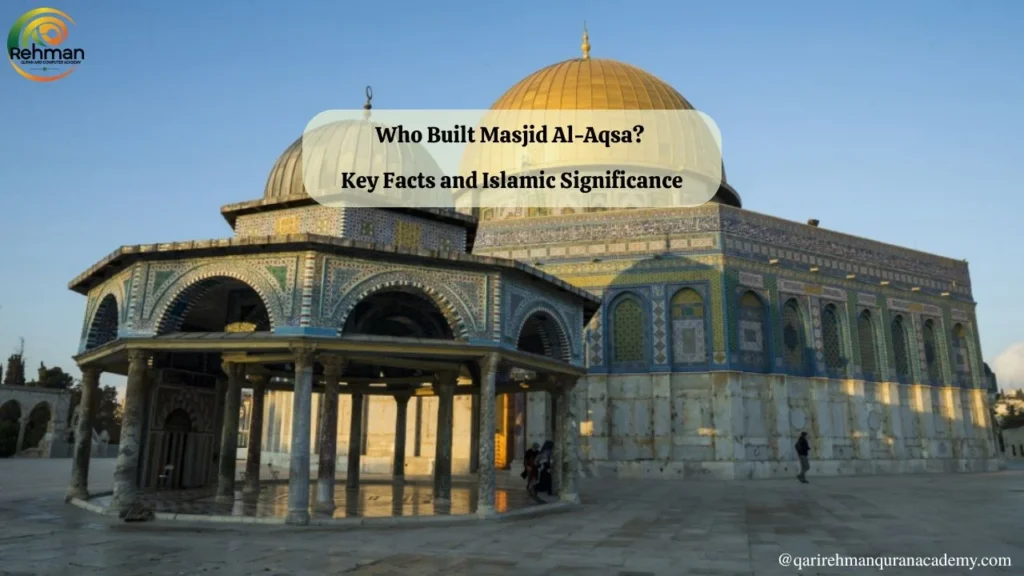
Mosque and its precincts feature the qibla mosque with silver dome next to golden Dome of the Rock. Mosque of the dome gleams amid gardens. See al-aqsa mosque in photos with blue tiles and arches.
Historical Images from Ottoman and Modern Era
Old photos capture mosque with three gates in black and white. Northern porch of the mosque shows soldiers in Ottoman dress. Mosque has remained firm through time.
Islamic History of Masjid Al-Aqsa Through Centuries
Ayyubid Restoration by Salahuddin Ayyubi
Salahuddin freed the mosque on October 2, 1187 after Hattin victory. He took back the mosque in november 1187? Wait, precise: October. He cleaned and fixed the mosque, removing Crusader changes. Added to the mosque Nur ad-Din’s minbar of al-aqsa, carved from Damascus wood. Minbar of al-aqsa stood for 800 years till fire. Salahuddin rebuilt porches and mihrab.
Ottoman Period and Architectural Additions
Ottomans ruled Masjid Al-Aqsa for 400 years from 1517. They added fountains and domes. Kemalettin bey to restore al-aqsa led works in 1922-1924, fixing after quakes. Bey to restore al-aqsa mosque used modern methods on old walls. Pertain to various islamic eras show in tiles and doors from their time.
20th Century Conflicts and Preservation Efforts
Fires hit the mosque on August 21, 1969, by Australian Denis Rohan; minbar burned. Plots to blow up the al-aqsa mosque surfaced in 1980s. Mosque are remains from attacks, yet al-aqsa mosque and the monuments endure. Jordan Waqf oversees repairs today.
Learn Quran Online to Understand Masjid Al-Aqsa References
Quran Translation Courses for Surah Al-Isra
Quran with translation breaks down the Isra verse word by word. Quran translation classes cover meanings of al-masjid al-aqsa. Read live quran with tutors from Qari Rehman Quran Academy to grasp the journey.
Quran Memorization (Hifz) with Focus on Al-Aqsa Verses
Quran memorization groups repeat Surah Al-Isra daily. Learn quran online at academy offers hifz plans tied to Masjid Al-Aqsa. Quran memorization (hifz) creates bond with the site.
Online Quran Classes with Tajweed for Accurate Recitation
Online quran classes drill tajweed for al-aqsa pronunciation. Quran reading gets smooth with feedback. Quran with tajweed honors the prophet‘s path.
Special Islamic Courses Connected to Masjid Al-Aqsa
Arabic Course for Understanding Quranic Context
Arabic language training decodes al-aqsa in Surah Al-Isra. Arabic course at academy reveals roots. Islamic education deepens site knowledge.
Islamic Education on Prophets Linked to Al-Aqsa
Hadith & fiqh studies explore prophet ties. Special islamic courses detail history. Basic islamic education builds foundation.
Basic Norani Qaida and Quran Reading for Beginners
Basic norani qaida teaches letters for quran reading. Basic salah course prepares for Masjid Al-Aqsa prayer. General basics & manners teach respect for holy places.
Frequently Asked Questions:
Who Built Masjid Al-Aqsa According to Islam?
According to islamic sources, prophet ibrahim started the site, while prophet Sulaiman finished the main mosque. Islamic history of masjid al aqsa credits prophet ibrahim for the first step in built masjid al-aqsa.
Which Prophet Was the First to Build Masjid Al-Aqsa?
Prophet ibrahim holds the role as the first to set up a prayer spot on the al-aqsa compound. History of aqsa mosque ties who built mosque aqsa to prophet ibrahim in islamic tradition.
Was Masjid Al-Aqsa Built by Prophet Adam (A.S.) or Prophet Sulaiman (A.S.)?
No text says prophet Adam built it; prophet Sulaiman raised the grand al-aqsa mosque building. Al aqsa masjid history points to prophet Sulaiman for the mosque was built structure.
What Does the Quran Say About Who Built Masjid Al-Aqsa?
Quran does not name the builder but calls it al-masjid al-aqsa in Surah Al-Isra. History about masjid al aqsa links masjid al-haram to masjid al-aqsa without direct prophet names.
What Is the Historical Background of Masjid Al-Aqsa’s Construction?
Islamic records show prophet ibrahim laid base, prophet Sulaiman added walls and dome of the rock mosque area. Aqsa mosque history covers mosque on the temple mount from early prophets.
Was Masjid Al-Aqsa Ever Rebuilt or Restored by Other Prophets?
Yes, many prophets fixed the farthest mosque over time. Mosque was restored by figures after prophet Sulaiman in pertaining to various islamic eras.
What Is the Connection Between Prophet Ibrahim (A.S.) and Masjid Al-Aqsa?
Prophet ibrahim chose the location of the mosque for worship with his son. Al aqsa history starts with prophet ibrahim in masjid al-aqsa in jerusalem.
How Old Is Masjid Al-Aqsa and When Was It First Established?
Over 3,000 years old from prophet ibrahim era. Al-aqsa with its 144 dunums began as a simple arab mosque consisted of stones.
What Is the Significance of Masjid Al-Aqsa’s Builders in Islamic History?
Prophets like prophet ibrahim and Sulaiman show religious significance of the great mosque. Islamic history honors masjid al-aqsa whose roots tie to prophet muhammad journey.
Why Is Masjid Al-Aqsa Considered So Sacred in Islam?
Masjid Al-Aqsa ranks third after masjid al-haram in mecca. Prophet muhammad night trip to masjid al aqsa makes al-aqsa holds high value in mosque and the islamic faith.