Understanding Niqab vs Hijab in Islamic Modesty
Defining Hijab, Niqab, and Other Islamic Head Coverings
What Is a Hijab?
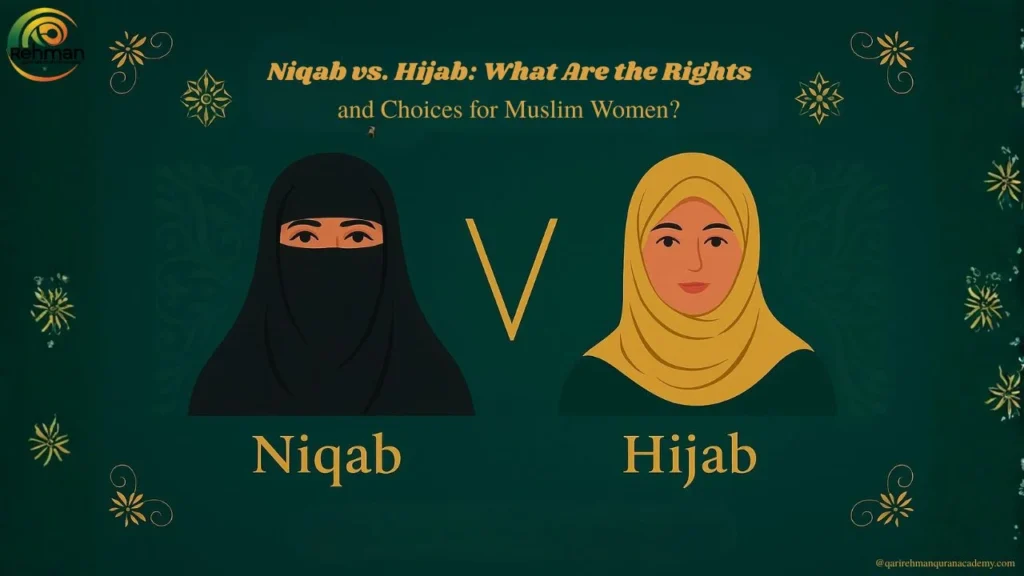
A hijab is a headscarf that covers the hair, neck, and shoulders, leaving the face clear. It’s a common covering worn by Muslim women to express modesty based on Islamic teachings in the Qur’an, like Surah An-Nur (24:31), which guides women to conceal their beauty in public spaces. Styles like al-amira, a two-piece veil, and shayla, a long headscarf that covers the head and neck, offer variety. The hijab is a headscarf that reflects faith and identity for Muslim women across the world. Learning its meaning through Quran Translation courses at Qari Rehman Quran Academy helps women understand its spiritual roots.
What Is a Niqab?
A niqab is a veil that covers the face, leaving the eyes uncovered. This garment emphasizes stricter modesty, often worn by some Muslim women in places like Saudi Arabia. The niqab is a veil rooted in Islamic tradition, with debates on whether the niqab is obligatory. It’s often worn with a headscarf to cover the face except for the eyes. Cultural practices shape its use, and studying Quran with Tajweed at Qari Rehman Academy ensures proper recitation of verses about modest dress.
Comparing Burka, Chador, and Other Coverings
A burka is a full-body covering that covers everything except the eyes, using a mesh screen to keep them visible. A chador, common among Iranian women, is a full-body cloak that leaves the face open. The khimar, a long headscarf, covers the head and chest. Unlike the hijab that covers the hair and neck, or the niqab that covers all of the face, these coverings worn by Muslim women vary by region. For example, burqas are common in Afghanistan, while hijabs are global. Islamic Education courses at Qari Rehman provide context for these garments.
Islamic Laws and Women’s Rights in Modesty
Quranic Guidance on Modesty for Women
The Qur’an outlines rules for women in Islam in Surah An-Nur and Surah Al-Ahzab, urging Muslim women to cover their beauty to promote modesty in public. These verses, revealed to Prophet Muhammad, guide daughters and the women of the believers to dress modestly. The islamic laws on women emphasize dignity, not restriction. Studying Quran Tafseer at Qari Rehman Academy helps Muslim women grasp the spiritual purpose of these coverings, ensuring they align with women’s Islamic rights.
Rights and Choices in Wearing Hijab or Niqab
Muslim women wear the hijab or choose the niqab based on personal faith, cultural norms, and rights of women in Islam. The Qur’an grants women in Islam rights to make choices, including how to express modesty. Some prefer the hijab for its simplicity, while others opt for the niqab for deeper devotion. These female rights in Islam include access to education and self-expression. Qari Rehman’s Basic Islamic Education course supports women in learning their Islamic rights for women.
Misconceptions About Women’s Rights in Islam
Some view Islamic attire like the hijab or niqab as oppressive, but Islam and women’s rights focus on respect and choice. The Qur’an and Hadith affirm women’s rights in Islam religion, including the Islam rights of wife and personal autonomy. Women can wear hijab or niqab freely, reflecting their faith. Hadith & Fiqh Studies at Qari Rehman clarify these Islamic rights for women, countering stereotypes with authentic teachings.
Niqab vs. Hijab vs. Burka: Key Differences
Coverage and Visibility Differences
The difference between hijab, niqab, and burka lies in coverage. A hijab covers the hair and neck, leaving the face open. A niqab covers the face and body, with eyes visible through a slit. A burka is a veil that covers the entire body, including a mesh screen around the eyes clear. The abaya, a loose garment that covers the body, often pairs with a head covering. Quran Reading courses at Qari Rehman help Muslim women learn verses about these coverings.
Cultural and Regional Variations
Muslim women across the world adopt different coverings. The niqab is common in Gulf countries, while the hijab is a headscarf worn globally. The chador is preferred by Iranian women, and the shayla is popular in the Middle East. These different kinds of coverings worn reflect cultural identity. For example, hijab vs niqab vs burka debates highlight regional preferences. Arabic Language Training at Qari Rehman helps women understand these cultural ties.
Niqab vs. Hijab: Which Is Better?
Choosing between hijab and niqab depends on personal faith and comfort. Neither is universally better; some Muslim women wear the hijab for simplicity, while others choose the niqab for added modesty. Social media, like niqab vs. hijab Reddit discussions, shows varied opinions. The Qur’an supports individual choice within Islamic guidelines. Quran Memorization at Qari Rehman strengthens spiritual conviction for Muslim women making these decisions.
Historical and Cultural Context of Islamic Head Coverings
Origins of Niqab vs Hijab in Islamic Tradition
The hijab and niqab trace back to early Islam, inspired by the Qur’an and teachings of Prophet Muhammad. Surah Al-Ahzab (33:59) advises women of the believers to cover for protection. Over time, styles like the khimar and al-amira evolved. The niqab is a veil some adopted for stricter modesty. Islamic Education courses at Qari Rehman explore these historical roots, helping Muslim women connect with tradition.
Global Practices Among Muslim Women
Muslim women across the world practice modesty differently. In Pakistan, hijabs are common, while in Saudi Arabia, niqabs are widespread. Burqas dominate in Afghanistan, and the chador is typical in Iran. These coverings worn by Muslim women reflect local customs. Online Quran Classes at Qari Rehman offer women global access to learn about these diverse practices.
Influence of Modern Fashion on Hijab and Niqab
Modern hijabs and niqabs blend faith with style. Trendy headscarf designs and colorful niqabs appeal to younger Muslim women. Social media, including niqab vs hijab Reddit threads, showcases these trends. The hijab is a headscarf now paired with modern outfits, while the niqab adapts subtly. General Basics & Manners courses at Qari Rehman teach Muslim women how to balance modesty with contemporary life.


Practical Considerations for Muslim Women
When Can a Woman Take Off Her Niqab vs Hijab?
Islamic rulings allow Muslim women to remove their hijab or niqab among close family (mahram) or in private. For example, a Muslim woman can have her face uncovered at home. These rules for women in Islam ensure comfort while maintaining modesty in public. Basic Salah Course at Qari Rehman teaches women how modesty applies during prayer.
Choosing Between Niqab vs Hijab: Practical Tips
Selecting a Niqab vs Hijab involves practical factors like climate and lifestyle. A hijab is lighter for hot weather, while a niqab suits those seeking more coverage. Community support helps Muslim women decide. Kalimas & Namaz courses at Qari Rehman provide foundational knowledge for confident choices.
Addressing Social Perceptions and Challenges
Muslim women wear hijabs or niqabs but face social challenges, like workplace bias or public stares. Niqab vs hijab Reddit discussions highlight these issues. Islam on women’s rights promotes confidence in Islamic attire. Basic Islamic Education at Qari Rehman empowers women to address misconceptions and embrace their rights.
Learning Modesty Through Islamic Education
Role of Quran Study in Understanding Modesty
Quran Recitation and Quran Translation clarify why Muslim women wear the Niqab vs Hijab. Verses in Surah An-Nur explain modest dress as a spiritual act. Quran with Tajweed and Quran Translation courses at Qari Rehman help women learn these teachings accurately, deepening their faith.
How Islamic Education Empowers Women’s Choices
Knowledge of Islamic laws on women supports informed decisions about Niqab vs Hijab. Women’s rights in Islam include learning their faith, which Special Islamic Courses at Qari Rehman provide. These courses empower Muslim women to choose coverings that reflect their beliefs.
Benefits of Online Quran Classes for Women
Learn Quran Online at Qari Rehman offers flexible, one-on-one classes for Muslim women worldwide. These child-friendly, affordable courses teach Quran Reading, Quran Tajweed, and Islamic Education, helping women understand modesty and their rights. Read Live Quran sessions ensure accessibility.
Frequently Asked Questions About Niqab and Hijab
What Is the Difference Between Hijab and Niqab?
The hijab is a headscarf that covers the hair and neck, leaving the face clear, while the niqab is a veil that covers all of the face, except for the eyes. This niqab vs hijab distinction shows the hijab focuses on hair and neck, but the niqab covers the face for greater modesty.
Is Wearing a Niqab Mandatory in Islam?
Wearing a niqab is not mandatory for every Muslim woman, as Islamic laws on women vary. Some believe the niqab is obligatory based on Qur’an teachings, but many scholars say the hijab meets rules for women in Islam, giving women’s Islamic rights to choose.
What Does the Quran Say About Hijab and Niqab?
The Qur’an, like verse 24:31, guides women of the believers to conceal beauty with a covering, such as a hijab that covers the head and neck. It doesn’t clearly state the niqab covers the face completely, so women rights in Islam allow flexibility in Islamic attire.
Is Burqa and Hijab the Same Thing?
No, a burqa and hijab are different. The hijab is a headscarf that covers the hair, while the burqa is a full-body cloak that covers everything except a mesh screen for eyes visible. The burqa offers more coverage than the hijab vs other coverings.
Why Do Some Muslim Women Wear the Niqab While Others Wear Hijab?
Some Muslim women wear the niqab for deeper modesty in public, believing it aligns with Islamic values from Muhammad’s teachings. Others wear hijab, a head covering, for simplicity, reflecting female rights in Islam to choose the Niqab vs Hijab based on personal faith.
Which Is Better — Niqab vs Hijab — According to Islam?
Islam and women’s rights don’t declare niqab vs hijab as better; both fulfill modest dress. The hijab covers the head, while the niqab covers the face, so Muslim women choose based on comfort and islamic rights for woman in public spaces.
What Are the Differences Between Niqab, Hijab, and Burka?
The hijab covers the hair and neck, the Niqab vs Hijab is a veil that covers the face with eyes uncovered, and the burka covers the entire body with a mesh screen. These coverings worn by Muslim women vary in niqab vs hijab vs burka for modesty.
Can Muslim Women Choose Whether to Wear the Niqab vs Hijab?
Yes, women’s rights in Islam religion allow Muslim women to decide between hijab and niqab. Islamic teachings support female rights in Islam to pick a covering worn that suits their faith, like al-amira, shayla, or niqabs, for modesty.
Is Wearing a Hijab Mandatory for Muslim Women?
Islamic laws on women often require a hijab as a headscarf for modesty, per Quran 33:59, but women in Islam rights allow flexibility. Some Muslim women wear the hijab always, while others wear it in public spaces, or when can a woman take off her hijab at home.
What Are the Cultural and Religious Reasons Behind Wearing Niqab vs Hijab?
Women across the world wear Niqab vs Hijab for Islamic modesty, rooted in Qur’an and Muhammad’s guidance. Culturally, Iranian women may prefer a chador, while others choose the Niqab vs Hijab for islam rights of wife and personal modest dress.
Conclusion
The niqab vs hijab choice reflects personal and cultural expressions of modesty for Muslim women. From the hijab’s headscarf to the niqab’s face veil, these coverings align with Islamic laws on women and women’s Islamic rights. Women across the world balance faith, tradition, and female rights in Islam when choosing Islamic attire. By learning through Quran Recitation, Quran Translation, and Online Quran Classes, Muslim women can make informed decisions, supported by Islam and women’s rights. Respecting these choices honors the diversity of Islamic practices.